
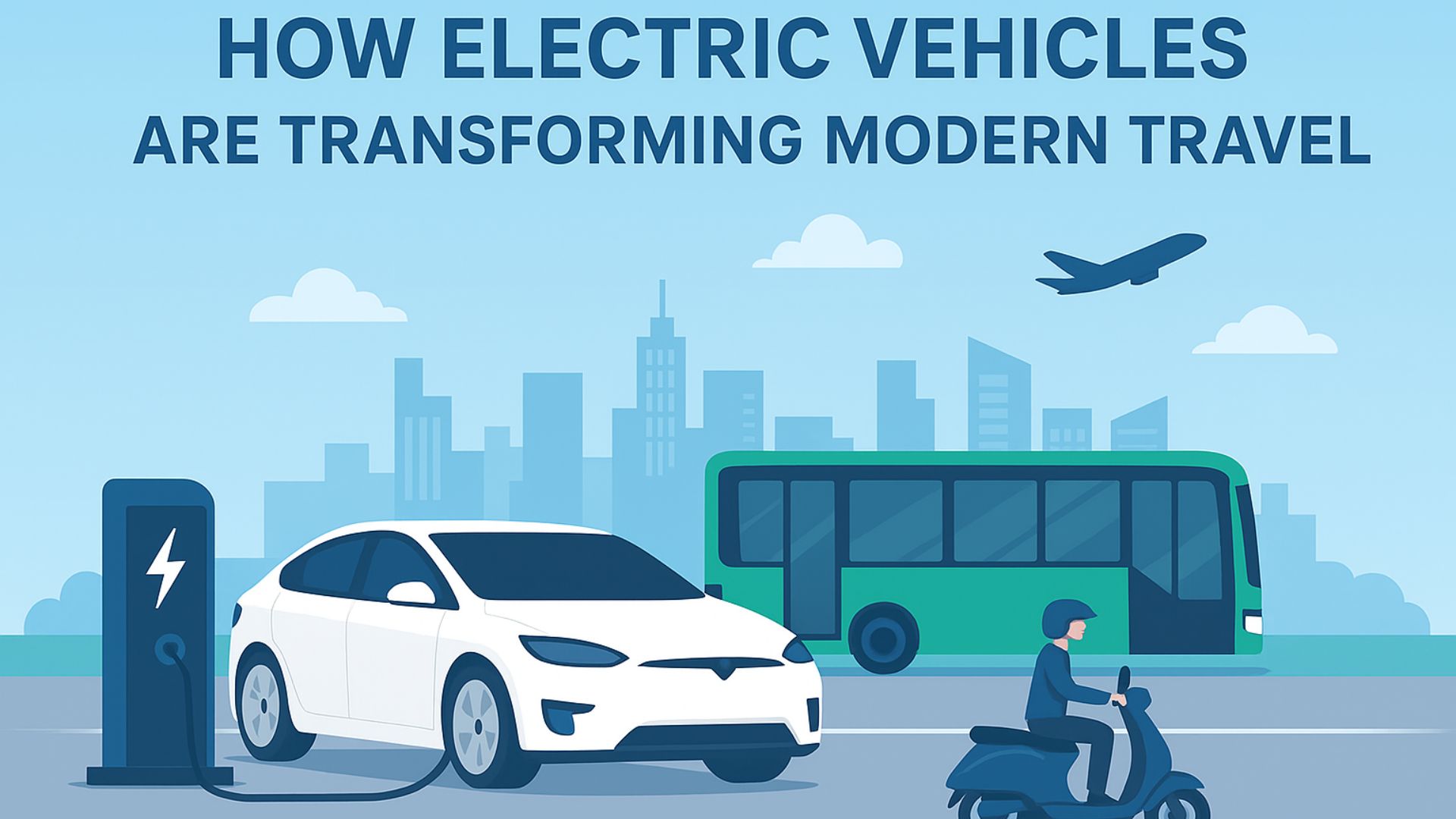
The global transportation industry is undergoing one of its most significant transformations in over a century the rapid shift from internal combustion engines to electric vehicles (EVs). What was once viewed as a futuristic innovation is now a mainstream reality shaping how people move, explore, and experience the world.
Electric vehicles are not just cars with batteries; they represent a technological revolution, an environmental necessity, and a lifestyle shift toward sustainability. As charging infrastructure expands, costs decrease, and governments adopt cleaner policies, EVs are redefining the way modern travel operates from local commutes to long-distance tourism.
This article explores nine key ways electric vehicles are transforming modern travel combining sustainability, innovation, and convenience into a new era of mobility.
1.The Global Rise of Electric Mobility
The EV movement has grown from niche innovation to global phenomenon. In the early 2010s, electric cars represented less than 1% of all vehicles sold. By 2025, the global market is expected to surpass 60 million EVs on the road, according to the International Energy Agency (IEA).
Several factors are driving this revolution:
- Government incentives such as tax credits and subsidies for EV buyers.
- Corporate sustainability goals pushing major carmakers to invest in EV technology.
- Consumer awareness of climate change and eco-friendly transport options.
Automakers like Tesla, BYD, Hyundai, Volkswagen, Tata Motors, and Nissan have set aggressive EV production goals. The growing competition has reduced costs and improved technology, making electric cars more accessible to everyday consumers.
Countries like Norway, China, and the UK are leading adoption, with plans to ban petrol and diesel car sales by 2035. The shift signals a new global standard one where electric mobility becomes the default mode of transport.
2.Sustainability: Driving a Cleaner, Greener Future
The most powerful argument for electric vehicles is their environmental impact. Traditional cars rely on fossil fuels, releasing carbon dioxide (CO₂) and pollutants that contribute to air pollution and global warming.
EVs, on the other hand, produce zero tailpipe emissions. When powered by renewable sources like solar, wind, or hydroelectric energy, they become almost completely carbon-neutral.
A study by the Union of Concerned Scientists found that EVs produce less than half the lifetime emissions of gasoline vehicles even when considering electricity generation and battery production.
Beyond climate benefits, EVs also reduce noise pollution, improve urban air quality, and create healthier living environments. Cities like London, Oslo, and Singapore have already witnessed air quality improvements after introducing electric public transportation and banning older diesel vehicles.
The environmental gains are clear: every new EV on the road brings us one step closer to a sustainable transportation ecosystem.
3.Economic Efficiency and Long-Term Savings
While electric vehicles may have higher upfront costs, their long-term financial benefits are substantial.
- Fuel Savings: Electricity is significantly cheaper than gasoline or diesel.
- Low Maintenance: EVs have fewer moving parts no oil changes, fewer filters, and less wear on brakes.
- Tax Incentives: Many governments offer rebates, reduced registration fees, and toll exemptions.
According to BloombergNEF, EV owners save an average of 30–40% on operating costs compared to gasoline vehicle owners.
Fleet operators, delivery companies, and taxi services are rapidly shifting to electric vehicles to cut costs and align with environmental standards. For travelers, EV rentals and shared electric transport offer both affordability and sustainability — two essential pillars of modern travel.
4.Technological Advancements Reshaping the Driving Experience
Electric vehicles are not just sustainable they’re technological masterpieces. From software integration to artificial intelligence, EVs embody the latest innovations in automotive design.
Modern EVs feature:
- AI-powered navigation that optimizes routes based on charging station locations.
- Advanced driver-assistance systems (ADAS) for safer and semi-autonomous driving.
- Smart infotainment systems with real-time diagnostics and over-the-air updates.
Tesla’s Autopilot, Hyundai’s Bluelink, and BMW’s iDrive are prime examples of how EVs are redefining the relationship between driver and machine.
Future advancements will include vehicle-to-grid (V2G) technology, allowing EVs to store energy and feed it back into the grid, and bi-directional charging, where cars can power homes during outages.
EVs are no longer just modes of transport they are intelligent mobility solutions designed to enhance convenience, safety, and energy efficiency.
5.Expansion of Charging Infrastructure Worldwide
Early adopters often faced “range anxiety” the fear of running out of charge mid-journey. But this concern is rapidly fading as charging infrastructure expands globally.
Countries, cities, and private companies are investing heavily in public charging stations, ultra-fast chargers, and highway networks. According to Statista, there are over 4 million public charging points worldwide as of 2025 a figure expected to triple by 2030.
Innovations in this sector include:
- Fast-charging networks that deliver 80% charge in 20–30 minutes.
- Wireless (inductive) charging systems for convenience.
- Solar-powered charging hubs in rural and remote areas.
Apps like PlugShare and ChargePoint now allow travelers to locate chargers in real-time, plan long trips, and even book charging slots in advance.
As accessibility improves, road trips in electric vehicles are becoming increasingly practical, comfortable, and enjoyable.
6.Electric Public Transportation and Shared Mobility
Electric mobility extends beyond personal vehicles it’s transforming public transportation systems worldwide.
Cities across the globe are introducing electric buses, trains, and taxis to reduce emissions and noise.
- China’s Shenzhen operates over 16,000 electric buses, making it the first fully electric bus fleet in the world.
- India’s FAME scheme (Faster Adoption and Manufacturing of Hybrid and Electric Vehicles) is promoting electric buses and three-wheelers.
- European cities are adding electric trams and shared e-bike programs.
In addition, ride-sharing giants like Uber and Ola are investing in electric fleets, while car rental companies such as Hertz and Avis are expanding EV options for tourists.
This shift not only reduces urban congestion and pollution but also democratizes sustainable travel, making green mobility accessible to millions
7.The Role of Electric Vehicles in the Tourism Industry
Electric vehicles are redefining how people experience travel and tourism. As the demand for eco-friendly travel grows, destinations are adapting to accommodate EV travelers.
Resorts, hotels, and tourist attractions now offer EV charging stations as part of their amenities. Scenic drives like California’s Pacific Coast Highway and Norway’s Atlantic Road are promoting “green routes” equipped with charging infrastructure.
EV road trips have become a trend combining adventure with sustainability. Travelers can now enjoy cross-country journeys without relying on fossil fuels, making the experience both responsible and exciting.
EV adoption also supports sustainable tourism certification programs, helping regions achieve their environmental goals while attracting conscious travelers.
Ultimately, EVs are helping reshape tourism into a model that values responsibility, technology, and environmental awareness.
8.Battery Innovation and Recycling for a Sustainable Future
The evolution of battery technology has been central to the success of electric vehicles. Modern EVs now use lithium-ion, lithium iron phosphate (LFP), and solid-state batteries, which offer higher efficiency, faster charging, and longer life cycles.
- Range: Many EVs today can travel 500–800 km per charge, significantly reducing range anxiety.
- Durability: Batteries last up to 10–15 years, and most manufacturers offer long warranties.
- Recycling: Companies like Redwood Materials and CATL are leading efforts to recycle old batteries and recover materials like lithium, nickel, and cobalt.
Emerging research in solid-state batteries promises even greater safety, energy density, and shorter charging times. As recycling technology advances, the environmental footprint of battery production will shrink ensuring the entire EV ecosystem becomes circular and sustainable.
9.The Road Ahead: Challenges and the Path to Global Adoption
Despite its rapid progress, the EV revolution still faces challenges:
- High upfront costs remain a barrier in developing countries.
- Battery disposal and mining ethics need stronger regulation.
- Charging infrastructure is still unevenly distributed.
- Grid capacity must expand to support mass EV charging.
However, these issues are being addressed through innovation and policy. Governments are investing in renewable-powered grids, carmakers are improving battery efficiency, and public-private partnerships are building charging corridors on major highways.
By 2035, experts predict EVs will account for 70% of all new car sales, marking a monumental shift in global transportation.
The road ahead is electric and it promises cleaner air, lower costs, and smarter mobility for everyone.
Conclusion: A New Era of Smart, Sustainable Travel
Electric vehicles have become a symbol of progress blending technology, sustainability, and human innovation into one seamless experience. They are transforming not just how we drive, but how we think about mobility, the environment, and the future of travel.
From urban commuting to long-distance exploration, EVs are reshaping the narrative of global transportation making travel smarter, cleaner, and more responsible than ever before.
As charging infrastructure grows, technology advances, and awareness spreads, one thing is certain: the future of travel is electric, and it’s already here.
Explore More Travel & Transportation Listings
Looking for more travel and transportation resources?
Discover a wide range of verified listings, guides, and industry insights in our comprehensive directory.
? Visit TravelAxis.org/transportation/ to explore top-rated transportation services, electric mobility providers, travel solutions, and eco-friendly travel options from around the world.
Stay connected with TravelAxis your trusted directory for global travel, tourism, and transportation businesses.